
Print Ship USA
5/8/2026
The Versatility of Custom Stickers
Custom stickers are one of the most cost-effective and versatile promotional tools available. They can be used for product packaging, branding, swag bags, guerrilla marketing, or simply as fun giveaways. However, not all stickers are created equal. Choosing the right type and material is crucial for the success of your sticker project.
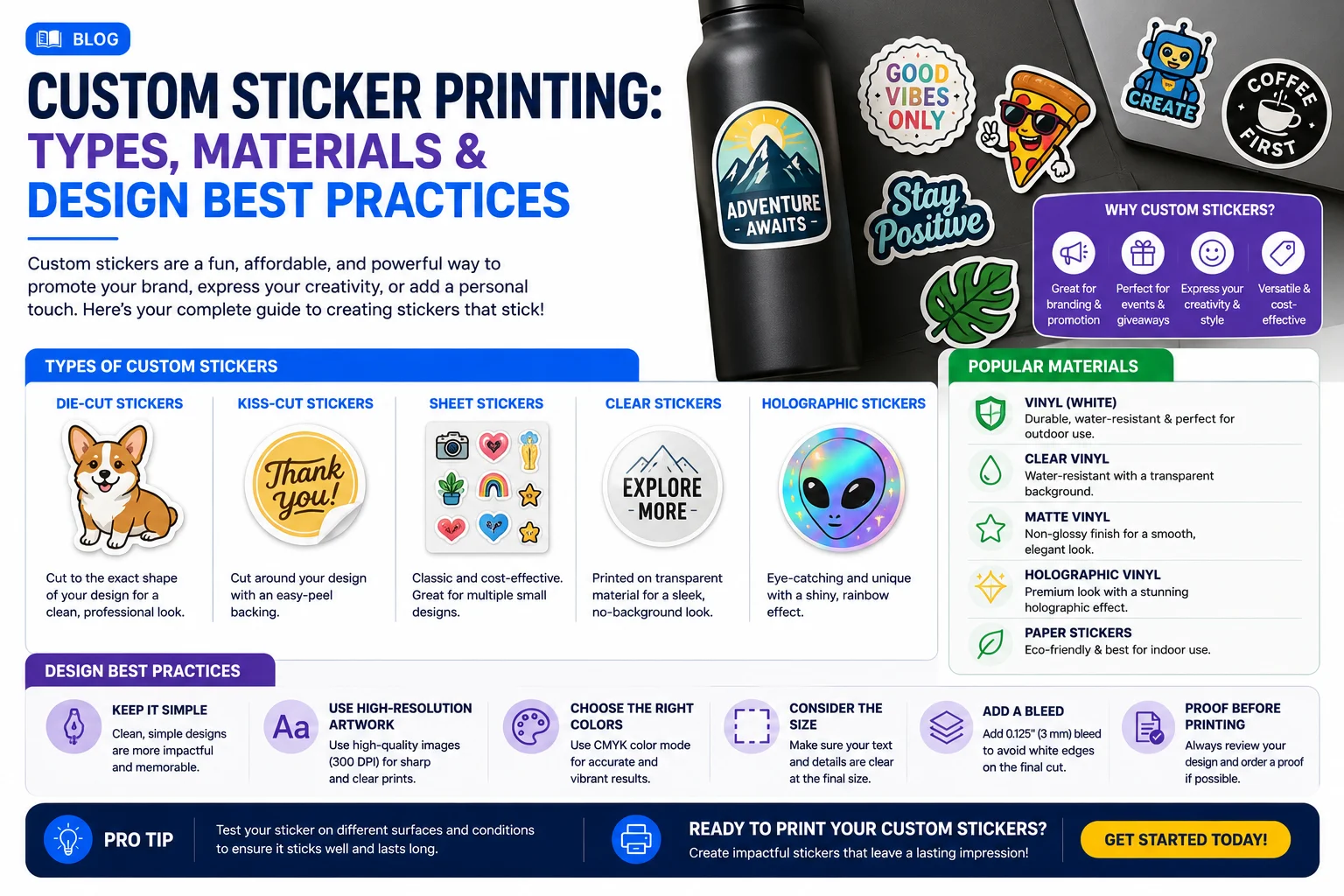
Die-Cut vs. Kiss-Cut Stickers
The first decision you'll need to make is how you want your stickers cut.
Die-Cut Stickers
A die-cut sticker is cut completely through both the sticker material and the paper backing, following the exact shape of your design. When you hand a die-cut sticker to someone, the sticker itself is the exact shape of your logo or illustration.
Best for: Handing out at events, inserting into packaging, and selling as individual merchandise. They have a premium, custom feel.
Kiss-Cut Stickers
A kiss-cut sticker is only cut through the vinyl sticker layer; the paper backing remains intact, usually in a square or rectangular shape around the sticker. This provides a border of backing paper around the sticker.
Best for: Complex or delicate sticker shapes that might bend or tear without the extra backing support. The extra backing area can also be printed on, providing space for a website URL or extra branding.
Sticker Materials
The environment where your sticker will be applied dictates the material you should choose.
1. White Vinyl
This is the industry standard for high-quality custom stickers. Vinyl is incredibly durable, waterproof, and UV-resistant. It can withstand the elements, making it perfect for outdoor use on car bumpers, water bottles, and laptops.
2. Clear Vinyl
Similar durability to white vinyl, but the background is transparent. This is ideal for window decals or when you want the surface beneath the sticker to show through your design. Keep in mind that printing white ink on clear vinyl usually requires a special process.
3. Holographic Vinyl
Holographic stickers are printed on a special iridescent vinyl that changes colors depending on the light and angle. They are highly eye-catching and popular for streetwear brands, artists, and modern packaging.
4. Paper Stickers
Paper stickers are the most economical option. They are strictly for indoor use and are not water-resistant. They are excellent for product labels (like on a coffee bag or jam jar), envelope seals, or temporary name tags.
Design Best Practices for Stickers
- Use Bold Lines: Fine, delicate lines might not print clearly or may get lost when the sticker is viewed from a distance. Use bold lines and clear, legible typography.
- Understand CMYK: As with all commercial printing, design in CMYK mode to ensure your colors print accurately.
- Include a Bleed: If your design goes to the edge of the sticker cut line, ensure you include a 1/8" bleed. The background color must extend beyond the cut line to prevent thin white borders due to slight cutting shifts.
- High Resolution: Ensure your artwork is at least 300 DPI or, better yet, use vector graphics for perfectly crisp edges.
By understanding the differences between cut types and materials, you can create custom stickers that look amazing and endure whatever conditions they face.